Tag: Paul Cornell
-
Previously, I thought I could at least rely on the art in Demon Knights to be good, but Neves and Albert are slipping. Too much detail here, too little there. Some of it appears positively disjointed–one page looks like George Perez and the final page (the super soft cliffhanger) looks rushed. I wonder if they…
-
Seeing as how Cornell’s pacing of the comic is so obvious–he tries and fails to make it feel like a big action movie–it’s boring. The only compelling element is the appearance of the personification of the city of Gotham. Guess what? It’s a Bat-man. But Cornell tries all these jokes and then the rousing action…
-
A few pages into Demon Knights, right after the first long fight sequence ends (Cornell’s all about fantasy creature fight scenes in this one), I realized the series’s big problem. Obviously, it’s Cornell, but specifically… he’s not making fun of it. He’s writing these characters in the Dark Ages and he’s got them using modern…
-
You know, if Paul Cornell’s idea of high comedy is revealing Madame Xanadu has a thing for demons from hell… I’m not sure I want to see his low comedy. If the first issue—and the large cast Cornell introduces—is any indication, Demon Knights is going to be a medieval team book with DC’s heroes of…
-
After reading Stormwatch, I’m only interested in two things. First, why does Paul Cornell write Martian Manhunter so badly? I don’t think he’s supposed to be a tool, but he seems like one. Second, are Apollo and Midnighter still gay? Or did Geoff, Jim and Dan retcon them straight? Because nothing else in Stormwatch really…
-
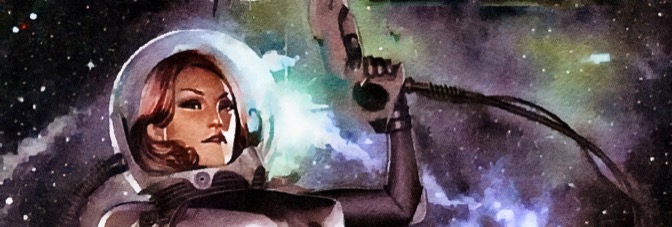
What’s so amusingly sad about the final issue of Deadly Origin is Cornell’s pop psychology to explain the villain’s intentions. I think if Cornell had sat down and watched a bad episode of “Another World,” he would have come off with a deeper understanding of the human condition and how to apply it to the…
-
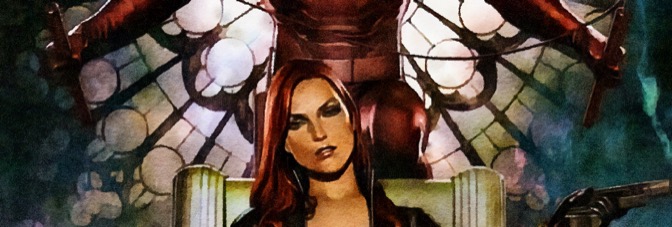
So all of (well, most of) John Paul Leon’s flashback art this issue is when Black Widow was a superhero in the seventies and eighties. It’s all this fantastic, bright Marvel superhero art, only by Leon. It looks amazing. I wonder if he could sustain it or if just doing a few panels is the…
-
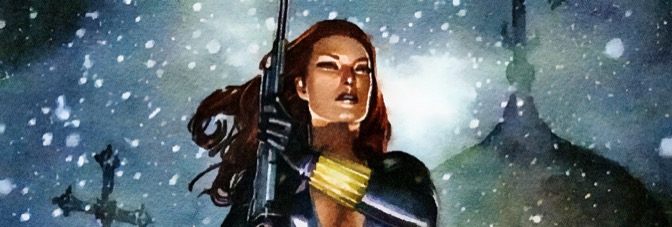
I wish I knew who had the idea suggesting Black Widow and Mockingbird were lesbian lovers, Cornell or his editor… Because unless the next issue reveals Natasha’s only into guys for country and it’s girls for self, it’s the lamest writing move I’ve read since Jeph Loeb had a fifteen year-old girl make out with…
-
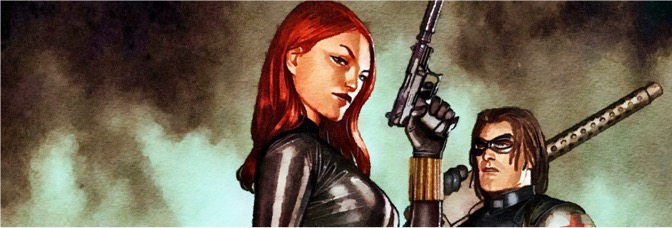
I thought I liked Paul Cornell. I would have reexamine that affection, or I can just finish reading Deadly Origin and it’ll do it for me. Apparently, Natasha’s really old. Like pre-WWII old. And she’s been artificially de-aged and she used to know Wolverine and Bucky when he was Winter Soldier for the Commies. This…
-

I think Cornell fell asleep here. It might explain why he thinks the alien soldier fused with the protagonist mentioning Tony Danza is a good joke. The mistake seems to be having the alien soldier talk through the whole issue–he calls the protagonist “marine” and everyone else calls the protagonist “soldier.” It makes for some…
-
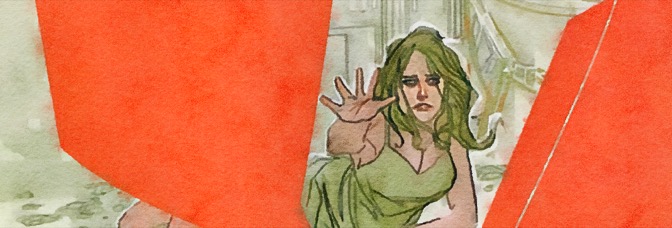
It’s actually kind of impressive how substantial a read Cornell makes this issue… especially since it takes place over about an hour. Unfortunately, Cornell’s writing failures here are the kind of thing…. A big part of the issue is what voice Soldier Zero is talking to the protagonist with. The Soldier Zero part (which goes…
-
It’s actually kind of impressive how substantial a read Cornell makes this issue… especially since it takes place over about an hour. Unfortunately, Cornell’s writing failures here are the kind of thing…. A big part of the issue is what voice Soldier Zero is talking to the protagonist with. The Soldier Zero part (which goes…
-
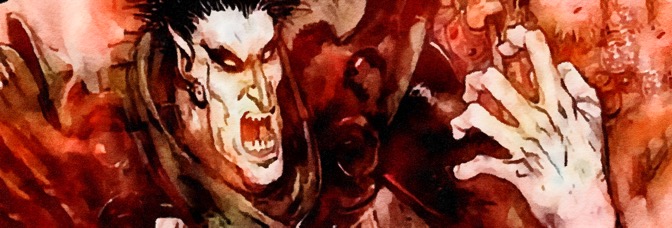
And it’s a happy ending for everyone not looking at Domingues’s art. Seriously, it’s really bad. But the final issue has a lot of charm–even if the ending is too short and Cornell wastes the cast of The Wind and the Willows. Having Toad run around with Johnny Storm seems somehow perfect and Cornell only…
-
The third issue has some very weak moments–oh, the Austen characters are from Sense and Sensibility–but it ends with the Fantastic Four all dead, shot by firing squad. Along with the little kid from Sense and Sensibility. So Cornell gets some respect for shooting a little kid. Even if it’s not shown on panel (Domingues…
-
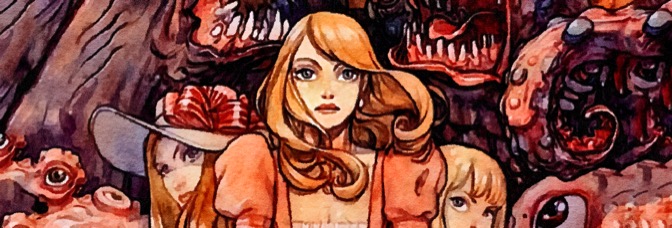
Well, if it weren’t for Domingues, Cornell might really have something this issue. Cornell tasks Domingues with drawing various literary figures and he comes up with something out of a “Scooby Doo” cartoon. The artwork here does not cut it–Marvel should be embarrassed. Domingues’s style is unfinished (they should have given him an experienced inker…
-
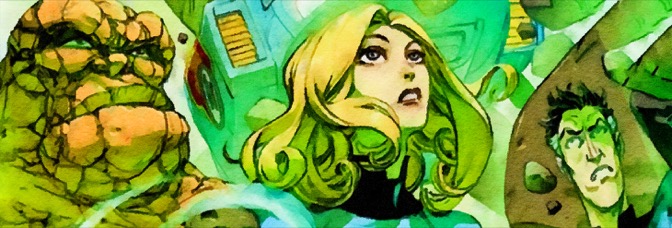
I really wanted to love Fantastic Four: True Story, but Cornell just isn’t able to make it precious enough. The concept is somewhat complex–Sue is suffering from melancholy and discovers it has to do with not wanting to read fiction. It turns out the whole world is suffering from a similar melancholy (a major problem…
-
And it’s a happy ending for everyone not looking at Domingues’s art. Seriously, it’s really bad. But the final issue has a lot of charm–even if the ending is too short and Cornell wastes the cast of The Wind and the Willows. Having Toad run around with Johnny Storm seems somehow perfect and Cornell only…
-
The third issue has some very weak moments–oh, the Austen characters are from Sense and Sensibility–but it ends with the Fantastic Four all dead, shot by firing squad. Along with the little kid from Sense and Sensibility. So Cornell gets some respect for shooting a little kid. Even if it’s not shown on panel (Domingues…
-
Well, if it weren’t for Domingues, Cornell might really have something this issue. Cornell tasks Domingues with drawing various literary figures and he comes up with something out of a “Scooby Doo” cartoon. The artwork here does not cut it–Marvel should be embarrassed. Domingues’s style is unfinished (they should have given him an experienced inker…
-
I really wanted to love Fantastic Four: True Story, but Cornell just isn’t able to make it precious enough. The concept is somewhat complex–Sue is suffering from melancholy and discovers it has to do with not wanting to read fiction. It turns out the whole world is suffering from a similar melancholy (a major problem…
-
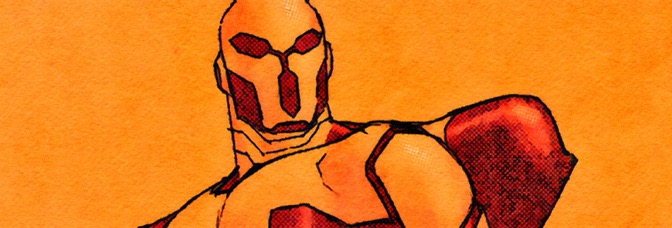
You know, I liked it. I dislike gimmicks as a principle, but Boom! allowed advance reviews of Soldier Zero so I figured they must think it’ll get good ones. You don’t see a lot of advance comic reviews from any superhero publisher. It succeeds because of Paul Cornell, near as I can tell, and because…
-
You know, I liked it. I dislike gimmicks as a principle, but Boom! allowed advance reviews of Soldier Zero so I figured they must think it’ll get good ones. You don’t see a lot of advance comic reviews from any superhero publisher. It succeeds because of Paul Cornell, near as I can tell, and because…
-

Once again, I’m opening with a comment about Hardman, because the comic really leaves no other choice. While Parker constructs this elaborate and complicated story (I don’t even know how complicated yet, but it’s the kind of story–a sequel to a forty-year old story–Brubaker does pretty well and Bendis fails on but does try and…
 The Stop Button