Tag: John Williams
-

JFK is a protracted experience. It runs over three hours, it has no real narrative structure–the film opens with the Kennedy assassination and an introduction to the principal characters (and some of the possible conspirators, always played quite well by a guest star), then jumps ahead three years where it starts chronicling lead Kevin Costner’s…
-
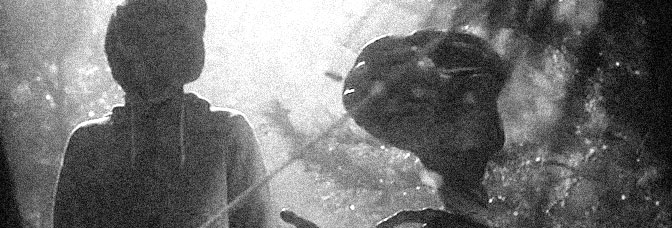
For E.T., Spielberg takes an incredible approach–every scene has to be iconic, every scene has to create a sense of nostalgia for it. It requires absolute control of the viewer and Spielberg’s only able to accomplish that control thanks to John Williams’s score. Every note in the score–and its corresponding image on screen–is perfect. As…
-

Lincoln is a political thriller. The vast majority of the film concerns the 13th Amendment and Lincoln’s attempts to get it through the House of Representatives. When Lincoln isn’t pursuing this story (or when director Spielberg and screenwriter Tony Kushner’s tangential subplots are too thin), the artifice starts showing. Not even Daniel Day-Lewis, in a…
-

I could, but will not, get into the idea Presumed Innocent is what studios were making as popular summer entertainment in the nineties. It’s simply to depressing to start that discussion. Instead, I’ll start with the film’s strengths. Even though the second half is very strong–how did Raul Julia not get nominated for this one…
-
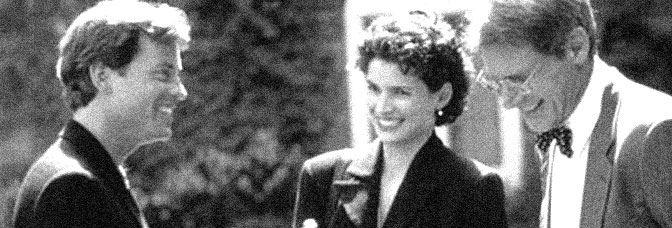
I remember the back of the laserdisc for Sabrina said something about how, going in to the film, one knows what’s going to happen, but the film’s about enjoying it happen. For a back of the disc blurb, it’s incredibly accurate. Sabrina is a joy from start to finish, mostly because Sydney Pollack has put…
-
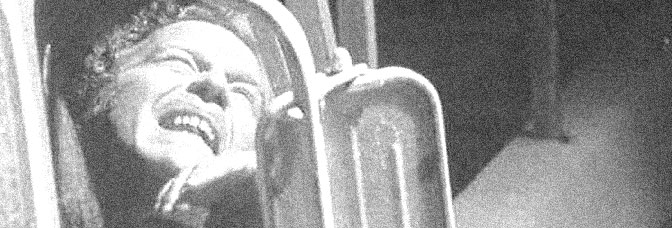
This version–now called ‘The Director’s Cut’–originally came out as ‘The Collector’s Edition’ maybe ten years ago (maybe less). The most striking thing about this cut is Dreyfuss’s insanity. In this version, he’s totally nuts… Spielberg edits back in (from the original, excised from the Special Edition) a couple significant scenes. First, showing off Roberts Blossom–one…
-
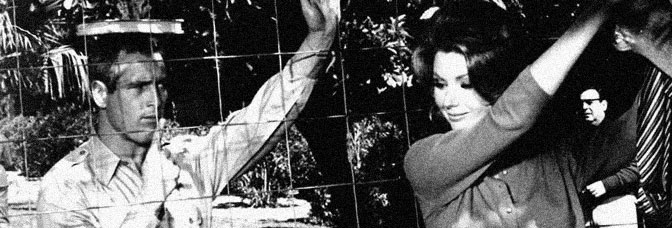
Paul Newman can’t play stupid. Harry Frigg is, for the first thirty to forty minutes of the movie, stupid. Even after he’s not stupid anymore–Sylva Koscina, quite believably, inspires him to improve himself–Newman’s stuck with the dumb, New Jersey from a Planters Peanut commercial accent. It doesn’t bother much in the scenes with Koscina, since…
-

I don’t know where to start with Close Encounters of the Third Kind. The jokey open would be something about listing the defects and not having any, but then flipping it and not being able to list everything Spielberg does right because his successes are so difficult to work out, particularly in to an easy-to-read,…
-
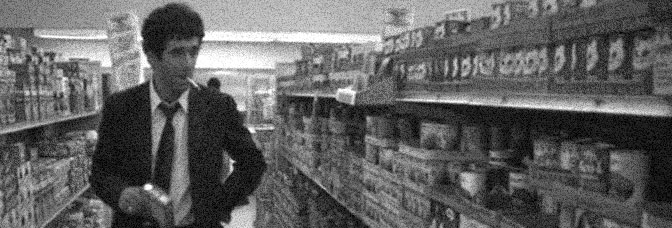
From the first scene in The Long Goodbye, it’s obvious Robert Altman was on to something with casting Elliott Gould as a character (Philip Marlowe) most famously personified by Humphrey Bogart. It isn’t just Gould not being Bogart and Gould not being a traditional noir detective in any way (Gould’s Marlowe is more concerned with…
-

In the last ten years, Tom Cruise has turned in a number of excellent performances (well, four… four is a number) and a bunch of decent ones. He’s only been bad once (of the films I’ve seen). So, Born on the Fourth of July was a jarring reminder to the early period of Cruise’s acting…
 The Stop Button