Tag: Focus Features
-

If someone had told me, I don’t think I would have believed Anton Corbijn got his start directing music videos. His direction of the American is so gentle and deliberate–so forcibly detached from his characters–it just doesn’t seem possible. Maybe they were all really well-directed music videos. I hadn’t originally planned on rushing to see…
-

So, people told me Shaun of the Dead was good, but they kept describing it as something akin to Hot Fuzz and whatnot. It’s not a spoof of a zombie movie though. It’s a zombie movie with a couple losers discovering their skill sets make them good at surviving a zombie holocaust, if not excelling…
-

Someone–Ebert maybe–is going to laud The Limits of Control. The nicest thing one can really say about it is it isn’t abjectly terrible. There aren’t many bad performances (Tilda Swinton’s lame and Bill Murray’s awful and Isaach De Bankolé is weak when he has more lines than the Terminator) and Jarmusch really does know how…
-

As Milk‘s opening titles ran, it occurred to me Danny Elfman scored it. It doesn’t sound anything like Elfman’s norm–you know, the modified Batman music–but it sounded like the kind of score Danny Elfman should be doing (and should have been doing for years). Milk‘s a biopic–and always feels like one, thanks in great part…
-
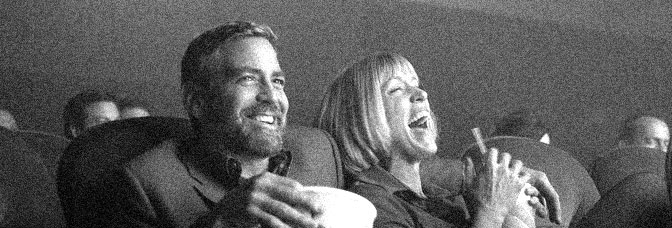
The Coens usually write tight scripts. Burn After Reading doesn’t have a particularly tight script. Instead, it’s got a bunch of great performances and funny scenes–astoundingly good dialogue (their use of curse words for humorous effect is noteworthy)–and some great details. But the film isn’t really much of a story. Literally speaking, it’s about what…
-

Hollywoodland is not a narrative mess. It’d be a far more interesting (and far less boring) two hours if it were. Instead, Paul Bernbaum’s plotting is intentional and considered. Neither Bernbaum nor director Allen Coulter seem to understand the problems with having two protagonists, not having anything to do with each other, juxtaposed for a…
-
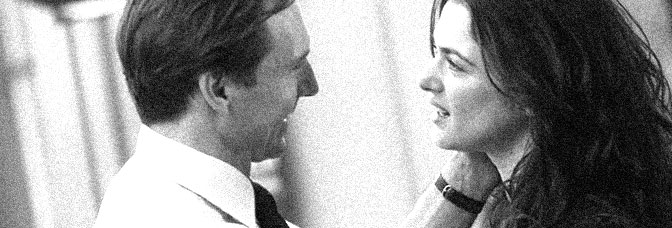
With two major exceptions, The Constant Gardener is defined by what it is not rather than what it is… It is not a thriller, it is not a mystery, it might not even be a narrative. It is a (justified) condemnation of Western pharmaceutical companies–with Western government’s express permission–treatment of sick African peoples. It’s also…
-

If I had any foresight, I would have realized Broken Flowers wasn’t going to end well. Actually, most of the film is just a ruse to disguise that fact. Instead of thinking about how the film was going to turn out, I spent all my time marveling at Jarmusch. His composition, his dialogue, everything, just…
-

Scoop starts out on awkward footing. The film follows Ian McShane’s recently deceased reporter on the boat across the Styx, where he gets a great scoop. McShane’s great and Woody makes the scene a lot of fun. Unfortunately, when Scarlett Johansson and Woody the actor show up in the next scenes, they can’t compare to…
 The Stop Button