Tag: Eleanor Parker
-

Almost all of Eleanor Parker’s feature films are available today on DVD. Almost all of her Golden Age titles have been available since 2018, when Warner Archive released The Last Ride (1944), while Kino Lorber’s release of The Oscar (1966) a few months ago is the most recent new-to-DVD Parker film. Despite Warner Home Video…
-
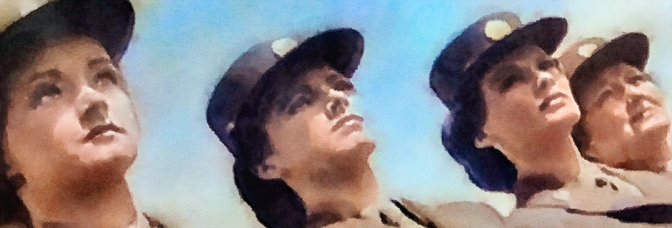
We’re in the Army Now is somewhat inexplicably a rarity. It’s a Warner Bros. “training short” for the Army (during World War II) but in the public domain. It’s got no IMDb entry, no Google results outside a citation from Doug McClelland’s Eleanor Parker: Woman of a Thousand Faces book (with the wrong title), yet…
-
Eleanor Parker did not win any Academy Awards, which is simultaneously obvious and inexplicable. The latter because she obviously deserved one (or six), the former because if she had won any, she’d have been better known in the eighties and nineties, when home video and basic cable drove classic film viewership. The first half of…
-

When she starred in Eye of the Cat, Eleanor Parker had been in more than forty theatrical films. She was forty-seven years old. She had just been in the biggest movie of all time–1965’s The Sound of Music. When Eye of the Cat came out in June 1969, Sound of Music was still playing in…
-

Going into the nineteen sixties, Eleanor Parker’s acting career seemed to have regained some of its recently lost momentum. Home from the Hill, released in March 1960, brought Parker into a genre she’d long avoided–the all-star soap. And–in addition to Parker being outstanding in the film, Hill had been a big hit. At the same…
-

When Eleanor Parker left her Warner Bros. contract in early 1950, she did so before any of her films of that year released. There were three–Chain Lightning, Caged, and Three Secrets. All three were successful. She was top-billed on the latter two (and second-billed only to Bogart in Lightning). She’d get an Oscar-nomination for Warner’s…
-
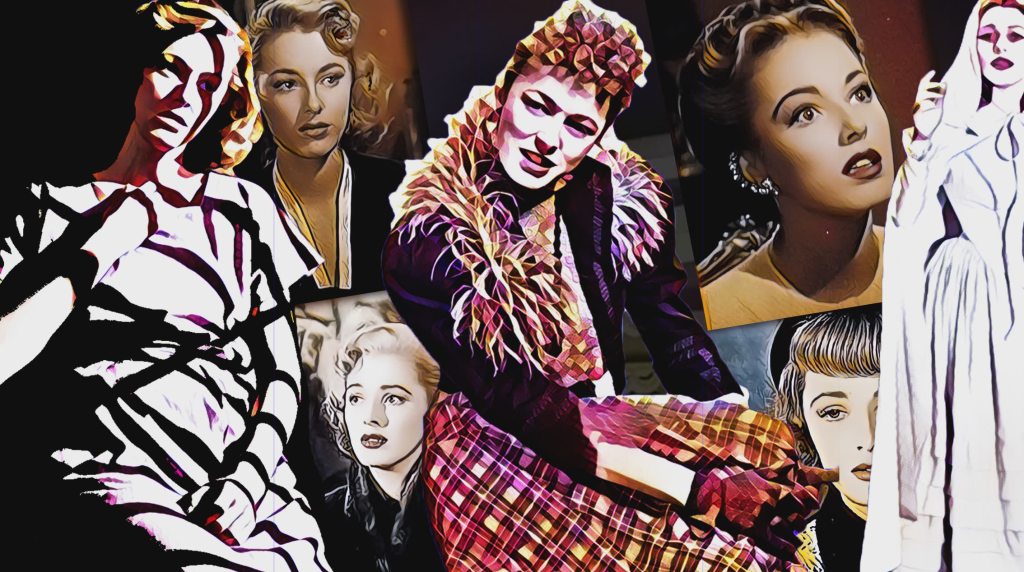
In June 1941, right before turning nineteen years old, Eleanor Parker signed on as a contract player at Warner Bros. She had just finished a year at the Pasadena Playhouse. Parker started acting in high school and had been dodging studio screen tests since she was fifteen; she wanted to continue developing her craft on…
-

Madame X never has good pacing. The movie starts with Tuesday Weld on trial, in old age makeup. She refuses to identify herself, hence the title, and won’t even assist her lawyer, Martina Deignan, in her own defense. Weld’s completely passive in the scene. Robert Hooks’s prosecuting attorney closing arguments dominate the scene, setting a…
-

Hans Brinker is clumsy and charmless. It plods through its runtime. Once it becomes clear Moose Charlap’s songs aren’t going to be getting any better and there’s not going to be much expert iceskating on display, it plods even more. A lot of things would help–better writing, better acting, better photography. Unfortunately, Hans doesn’t get…
-
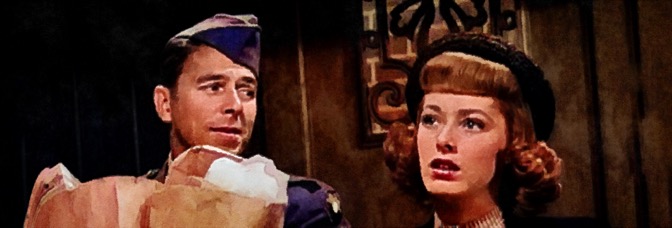
The Voice of the Turtle runs an hour and forty minutes. There’s a split about forty minutes in and, in the second hour, leads Eleanor Parker and Ronald Reagan are playing slightly different characters. Screenwriter John Van Druten adapted his play (with additional dialogue from Charles Hoffman) and had to “clean things up.” The play…
-
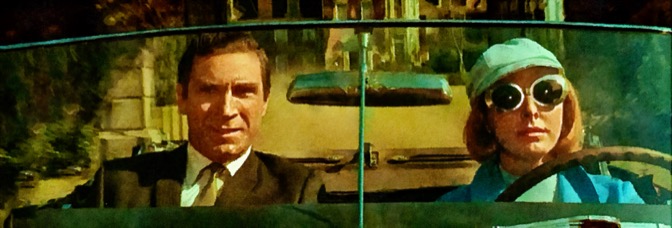
It takes a long seventy-five minutes to get there, but How to Steal the World does have some good moments in its finale. World is a theatrical release of a “Man from U.N.C.L.E.” television two-parter. It leads to an often boring ninety minutes, which improves in the second half just for momentum’s sake, leading up…
-

The Seventh Sin has three problems. The first is the third act; it’s too rushed. Given the constraints of the film production–a shot-in-Hollywood production about a cholera outbreak in a rural Chinese town–there’s not so much to be done about it. The film has a limited cast, especially once the action moves from Hong Kong…
-
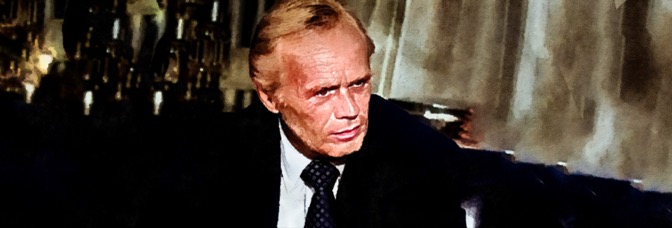
Even for a TV miniseries, Vanished feels like it runs too long. There are always tedious subplots, like folksy, pervy old man senator Robert Young plotting against President Richard Widmark. Widmark is up for re-election and he’s vulnerable. Even his own press secretary’s secretary (Skye Aubrey) thinks Widmark is “an evil man,” possibly because he’s…
-

Maybe I’ll Come Home in the Spring opens with a montage sequence. Sally Field is hitchhiking cross country (supposedly, it’s all California) while audio of her calling home to her parents–after running away to become a hippie–and letting them know she’s all right. The exact amount of time she’s away, where she went, how she…
-

Valentino opens with lead Anthony Dexter (whose resemblance to Valentino got him the job, not his acting abilities) doing the tango. It’s the troupe’s rehearsal and it’s fine. It’s not concerning, which is sort of cool for the film, because most of the scenes are concerning. George Bruce’s screenplay–based on his own story, “Valentino As…
-

The first thirty-nine percent of Never Say Goodbye is phenomenally paced. It could be a short movie, if there were a little tragedy through in. A little melodrama. Seven year-old Patti Brady is moving back in with mom Eleanor Parker after living six months with dad Errol Flynn. They’re divorced. Flynn’s a successful cheesecake pinup…
-

Farrah Fawcett star vehicle masquerading as a Charles Grodin comedy masquerading as a Farrah Fawcett star vehicle. He’s an insurance investigator, she’s his (hired) wife for a ruse. Grodin’s okay, Fawcett’s likability can’t overcome the script; the best performance is Joan Collins, playing one of the suspects (all the suspects are notable guest stars). Terrible…
-

Once Upon a Spy is a strange result. I mean, it’s a TV movie (pilot) for a spy series, complete with a kind of great James Bond-lite seventies music from John Cacavas, Christopher Lee in a electronic wheelchair with a rocket launcher, spy mistress Eleanor Parker working out of a secret headquarters in the Magic…
-

The Tiger and the Pussycat tells the sad tale of forty-five year-old businessman, Vittorio Gassman. He’s just become a grandfather. His college-age son wants to have long hair. All of his wife’s friends are abandoned women; their husbands have run off with younger women. Gassman is dissatisfied. Upon finding his son attempting suicide over a…
-

Watching Panic Button, two adjectives came to mind repeatedly. Anemic and stupefying. It’s incredible the things the film can’t make funny–like Maurice Chevalier, Carlo Croccolo and Eleanor Parker dressed up as nuns trying to make it to a Venice film festival. Not the Venice Film Festival, because the one in Panic Button also shows TV…
-

Warning Shot is almost successful. For most of the film, director Kulik and screenwriter Mann Rubin craft an engaging mystery. Then the third act happens and they both employ cheap tricks and it knocks the film off course. It’s a rather short third act too–the film’s got a peculiar structure, probably to allow for all…
-

Pride of the Marines is a disappointment. It never gets particularly good, but it does have a lot of potential–at least from its cast–so when it starts getting better and then slips, it’s a disappointment. The film starts before Pearl Harbor with John Garfield’s would-be bachelor falling for Eleanor Parker. Garfield’s reasoning for wanting to…
-
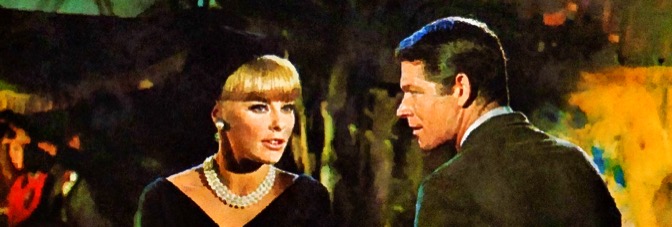
The Oscar is a spectacular kind of awful. It’s the perfect storm of content, casting and technical ineptitude. Director Rouse probably doesn’t have a single good shot in the entire film. It might not even be possible with Joseph Ruttenberg’s photography and the maybe studio television level of the set decoration. Though there is this…
-

Detective Story, the film, is William Wyler’s “production” of Sidney Kingsley’s play of the same title. Philip Yordan and Robert Wyler adapted the play. Wyler directed and produced the film. It is a stage adaptation and proud of it. The phrasing above is directly adapted from how the film opens and credits Wyler and Kingsley…
-
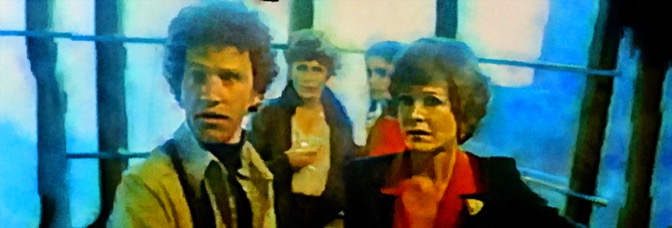
She’s Dressed to Kill is a simultaneously a perfect TV movie and a disappointment. It’s a murder mystery set on an isolated mountain; Eleanor Parker is a recluse fashion designer who has a show and the attendees can’t stop being murdered. Only the killer has followed the attendees, as the murdering starts before the fashion…
-

Max Steiner does the music for Caged, which is strange to think about because Caged barely has any music. Director Cromwell instead emphasizes the silence, especially as the film opens. Right after the opening credits, which do have music, Caged gets very quiet. “Silence” reads all the walls in the women’s prison where protagonist Eleanor…
-

Lizzie is about lead Eleanor Parker’s struggle with multiple personality disorder. More accurately perhaps, Lizzie is about Parker’s multiple personality disorder. As a protagonist, Parker disappears fairly quickly into the film’s eighty minute runtime. She doesn’t even get to open the film; it introduces her through other characters’ expository conversation. Screenwriter Mel Dinelli, quite unfortunately,…
-

The first hour of A Hole in the Head is slow going. It shouldn’t be slow going, not with everything the film has going for it, but director Capra is real lazy. He’s lazy with his composition, he’s lazy with his actors, he’s lazy with the pace. It’s amazing how the film’s pluses are able…
-

So much of The Sound of Music is exquisite, the film’s got enough momentum to get over the rough spots. The film has three and a half distinct sections. There’s the first, introducing Julie Andrews to the audience, then introducing Christopher Plummer and family to the Andrews and the audience, which then becomes about Andrews…
-

Bad direction from Rich hobbles the whole picture, which concerns destitute blue blood turned gigolo Michael Sarrazin plotting with latest squeeze Gayle Hunnicutt to off (Sarrazin’s) rich aunt, Eleanor Parker, for her money. Complicating matters is Parker and Sarrazin’s history. They’ve been carrying on in the biblical sense since Sarrazin was a teenager. Icky bad.…
 The Stop Button